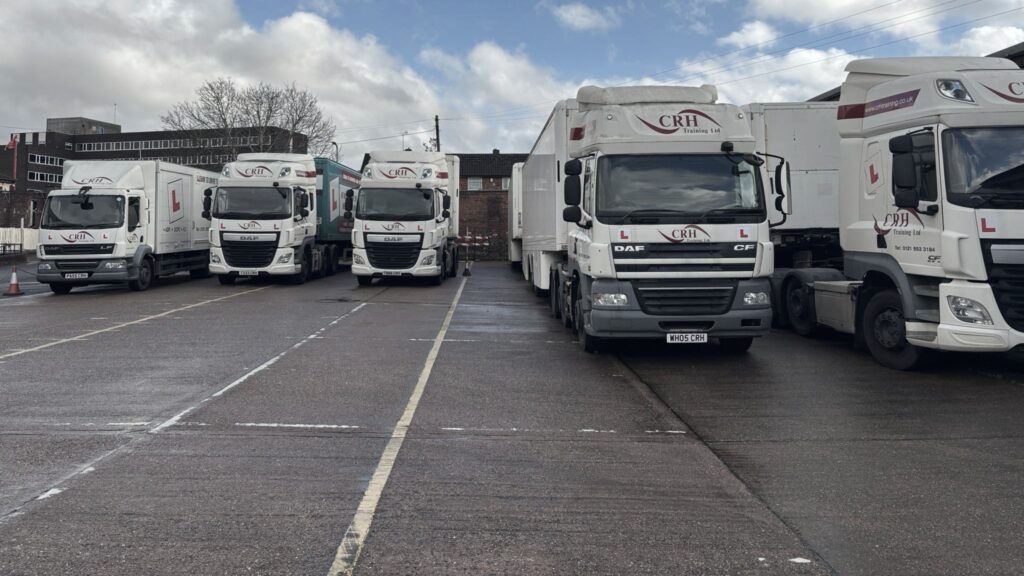
Becoming a Heavy Goods Vehicle (HGV) driver is a rewarding career path that offers ample job opportunities and competitive pay in 2023. The process of training an HGV driver is strictly regulated, ensuring that all drivers are proficient and safe on the road. But how long does it take to become an HGV driver in the UK?
The time it takes depends on several factors, including the type of HGV licence you want to obtain, your driving experience, how quickly you are able to pass your tests, and the HGV training company that you choose. Practical HGV training can take as little as five days. However, on average, it takes between 7 and 12 weeks to complete the entire process.
What Are The Different Types Of HGV Licences?
The type of HGV licence needed depends on the weight of the vehicle you want to be able to drive and how much additional weight it can pull if a trailer is attached.
Category C1: A C1 vehicle weighs between 3500 kg and 7500 kg, and it allows for a trailer that weighs up to 750kg.
Category C1+E: A C1 + E licence enables you to drive vehicles that weigh between 3500kg and 7500kg. It allows for a trailer that weighs more than 750kg.
Category C: The C license enables you to drive vehicles weighing over 3500kg and a trailer weighing up to 750kg.
Category C+E: The C+E licence enables you to drive the largest HGVs that weigh over 3500kg, and a trailer that weighs over 750kg.
Recent changes to the rules of HGV licence acquisition mean that you may now go straight to the HGV C + E training course from a standard car licence.
Theoretical Training and Tests
Before you can get behind the wheel of an HGV, you’ll need to pass a series of theoretical tests. These tests assess your understanding of road signs, rules of the road, and driving safety.
The first step towards becoming an HGV driver is to obtain a car driving licence if you don’t already have one. You must be at least 18 years old and hold a full car driving licence (category B) to begin HGV training.
Next, you apply for the provisional entitlement for an HGV licence, which involves a Driver Medical Examination. This examination ensures that you are physically fit to drive an HGV, with good vision and no serious health conditions that could affect your driving ability.
Once your provisional entitlement is granted, you can start to prepare for the Driver CPC Part 1 Theory Test. This test consists of two parts: multiple-choice questions and hazard perception. The preparation time for this test can vary, but most people will need 2 to 4 weeks of study to pass.
Practical Training and Tests
After passing the theory tests, you move on to the practical aspects of HGV training. This stage involves hands-on instruction in an HGV vehicle.
First, you’ll need to pass the Driver CPC Part 3 Driving Ability Test, a practical test where you demonstrate your driving skills, including vehicle safety checks and practical road driving. The time required to prepare for this test depends on how quickly you adapt to driving an HGV. Typically, a training course of 5 to 7 days is enough for most learners.
Once you’ve passed the practical driving test, you’ll need to complete the Driver CPC Part 4 Practical Demonstration Test. This test focuses on vehicle safety and the ability to load the vehicle correctly and secure the cargo. This is usually covered in a day’s training, followed by the test itself.
Continuing Training
After you’ve successfully passed all the tests, you can start driving professionally. However, your training doesn’t end here. To keep your Driver Certificate of Professional Competence (Driver CPC), you’ll need to complete 35 hours of periodic training every 5 years. This training ensures that you stay up to date with changes in the regulations and can continue to drive safely and efficiently.
Do HGV Drivers Earn Good Money?
The average salary for an HGV driver in the UK can vary depending on factors like location, level of experience, the company you work for, and the type of driving you do. However, a rough estimate would put the average salary for a lorry driver somewhere between £25,000 and £35,000 per year. With a few years of experience and training, this salary can increase significantly. The salary can rise to £40,000 or more for those with more experience and willing to take on longer routes.
The high demand for HGV drivers in the UK in 2023 has resulted in a significant increase in salary, with many companies offering higher pay, fewer working hours, bonuses and incentives for new drivers. This demand has led to very competitive pay rates, making HGV driving a potentially lucrative career for those willing to undergo the training and certification process.
To book an HGV Training Course, or for further information, please contact CRH on 0121 553 3184.